HDPE Manhole Inspection
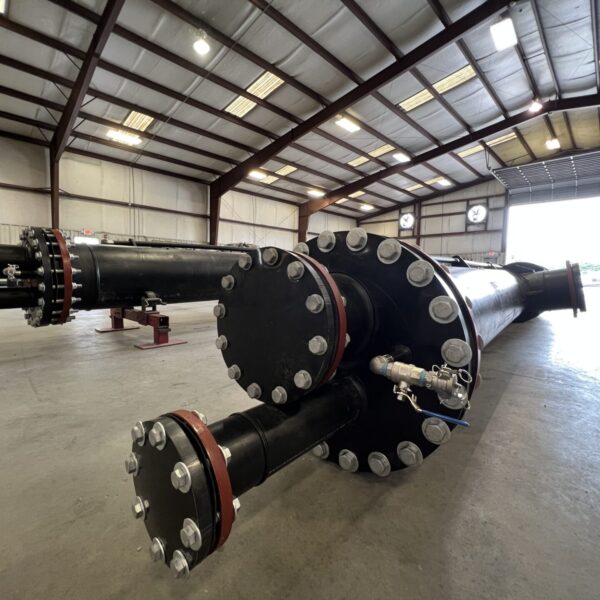
Plastic Fusion Fabricators provides HDPE manhole inspection and testing for municipal and industrial sewer, stormwater, and wastewater networks. We assess the condition of HDPE manholes and structures — evaluating fusion joint integrity, structural deformation, inflow and infiltration, and leak-tightness — and document findings against the standards engineers and operators rely on. As the people who fabricate and fuse these structures, we know exactly where HDPE manholes succeed and where they fail.
HDPE manholes don’t fail the way concrete does. There’s no crown corrosion, no spalling, no cracking from acid attack. Instead, HDPE inspection focuses on what matters for a fused thermoplastic structure: the integrity of the fusion welds connecting the manhole body to the pipe network, deformation or ovality from improper backfill or surface loads, and infiltration through faulty connections. Inspecting an HDPE structure correctly means understanding how it was fabricated and fused — which is where a fabricator’s expertise outperforms a generic camera-only inspection.
With 40+ years fabricating and fusing HDPE structures, Plastic Fusion brings fabrication-level knowledge to every inspection. We don’t just record what a camera sees — we evaluate whether the fusion joints, structure, and connections are sound, and what it takes to correct any deficiency.
What HDPE Manhole Inspection Covers
- Fusion and joint integrity — examination of the extrusion and electrofusion welds connecting the manhole body to the pipe network, checking for cracks, pinholes, or signs of separation
- Deformation and ovality — assessing bending, buckling, or ovality caused by improper backfilling or heavy surface loads
- Inflow and infiltration (I/I) — verifying that groundwater isn’t entering the system through faulty seals or connections
- Abrasion and debris — checking interior wall condition and sediment buildup
- Structural condition — overall assessment of the manhole body, base, and connections
Inspection Methods
- Visual and physical assessment — direct evaluation of accessible structures and connections
- CCTV and remote camera inspection — cameras lowered into the structure to capture high-resolution imagery where physical entry isn’t practical
- Air and leak testing — low-pressure air testing to ASTM F1417 to verify leak-tightness
- Fusion joint evaluation — fabrication-informed assessment of weld integrity
NASSCO-Aligned Assessment Levels
HDPE manhole inspections follow recognized condition-assessment frameworks:
- Level 1 (General) — basic assessment of overall physical condition, flow, and structural integrity
- Level 2 (Detailed) — comprehensive data logging documenting all defects, fusion joint condition, and structural findings
Both levels produce a documented condition report that operators and engineers can use for maintenance planning, compliance, and capital budgeting.
Why PFF for HDPE Manhole Inspection
A camera company can tell you what a manhole looks like. A fabricator can tell you whether it’s sound. The most important inspection criteria for an HDPE structure — fusion joint integrity, weld separation, connection integrity — require understanding how the structure was built and fused. Plastic Fusion fabricates HDPE manholes, which means our inspectors evaluate fusion welds with the same expertise we use to make them. We identify deficiencies a visual-only inspection misses, and we can correct what we find.
Reference Standards
HDPE manhole inspection and testing reference established industry standards, including ASTM F1759 (design of HDPE manholes for subsurface applications), ASTM D2321 (underground installation of thermoplastic pipe), ASTM F1417 (air testing for leak-tightness), and ASTM D3350 (polyethylene materials). Inspecting against these standards gives operators documentation their compliance and engineering teams can stand behind.
Why Engineers and Operators Specify Plastic Fusion
- 40+ years fabricating and fusing HDPE manholes and structures
- Fabrication-level expertise in fusion joint integrity assessment
- Visual, CCTV, and air/leak testing methods
- NASSCO-aligned Level 1 and Level 2 condition assessment
- Documented condition reports for maintenance, compliance, and budgeting
- Capability to correct deficiencies, not just report them
- Active projects across 24 states with nationwide mobilization
Industries Served
Plastic Fusion inspects HDPE manholes for municipal water and wastewater utilities, stormwater authorities, industrial manufacturers, and environmental and construction firms responsible for sewer and drainage infrastructure.
HDPE Manhole Inspection FAQs
What does an HDPE manhole inspection involve?
An HDPE manhole inspection evaluates the condition and integrity of a high-density polyethylene manhole structure. Unlike concrete inspections that focus on cracking and corrosion, HDPE inspection focuses on fusion joint integrity (checking welds for cracks, pinholes, or separation), structural deformation or ovality, inflow and infiltration through connections, and leak-tightness. Inspection methods include visual assessment, CCTV/remote camera imaging, and air/leak testing to ASTM F1417, producing a documented condition report.
How is HDPE manhole inspection different from concrete manhole inspection?
Concrete manhole inspection looks for cracking, spalling, and corrosion — the failure modes of concrete in sewer environments. HDPE doesn’t corrode or spall, so HDPE inspection focuses on different criteria: the integrity of the fusion welds joining the structure and pipe network, deformation from improper backfill or surface loads, and infiltration through faulty connections. Because the critical issues are fusion-related, a fabricator with fusion expertise evaluates an HDPE structure more thoroughly than a camera-only inspection.
What standards apply to HDPE manhole inspection?
Inspection and testing reference ASTM F1759 (HDPE manhole design), ASTM D2321 (thermoplastic pipe installation), ASTM F1417 (air testing for leak-tightness), and ASTM D3350 (polyethylene materials). Condition assessment typically follows NASSCO-aligned Level 1 (general) and Level 2 (detailed) frameworks. Inspecting against these standards provides documentation that compliance and engineering teams can rely on.
Can you inspect manholes you didn’t fabricate?
Yes. We inspect HDPE manholes and structures regardless of who fabricated them. Our fabrication background means we evaluate fusion joints and structural integrity with deeper expertise than a general inspection service — and if the inspection identifies deficiencies, we can recommend and perform the corrective work.
What do I get from an HDPE manhole inspection?
You receive a documented condition report covering fusion joint integrity, structural condition, deformation, infiltration, and leak-test results, aligned to the assessment level (Level 1 or Level 2) your project requires. The report gives you the data to plan maintenance, support compliance and permit requirements, and budget capital around real structure conditions.
Request an Inspection
If you need HDPE manhole inspection — fusion joint assessment, leak testing, or full condition evaluation — Plastic Fusion brings fabrication-level expertise to every assessment. Contact us to schedule an inspection or discuss your network’s needs. For fabrication of new structures, see our HDPE manholes page.