
Tailings Pond Liners
CONTACT FOR TAILING POND LINER INSTALLATION


Unmatched Performance
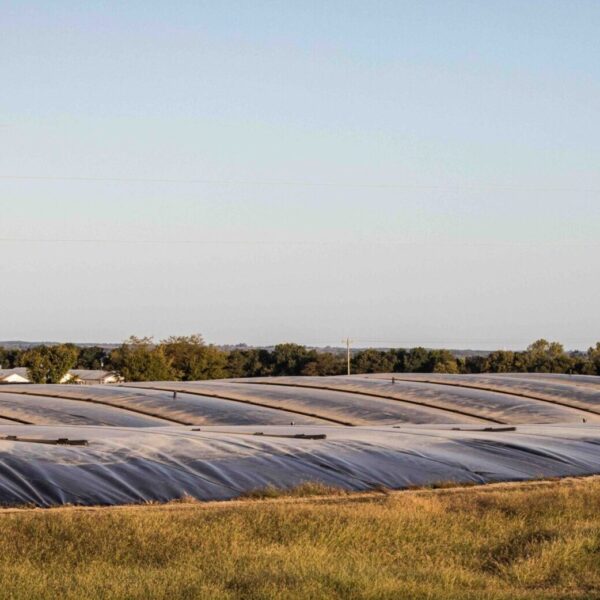
“Plastic Fusion was hired to test, repair, and replace existing pond liners on a restart project. The scope of work included installing a new insulated HDPE cover on the existing AD lagoon. Not only was the quality of the crew’s work exceptional, PFF was given the “A Team” award for outstanding work ethic.”
Ron Davies, Project Manager
Platte River Biogas, LLC
wHAT WE DO
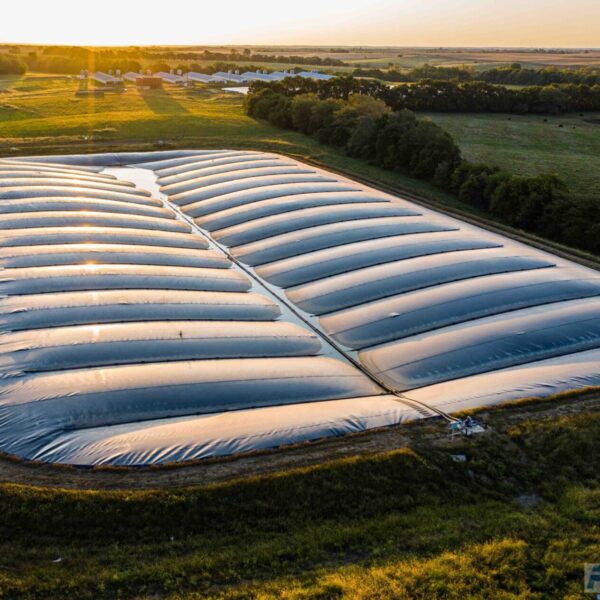
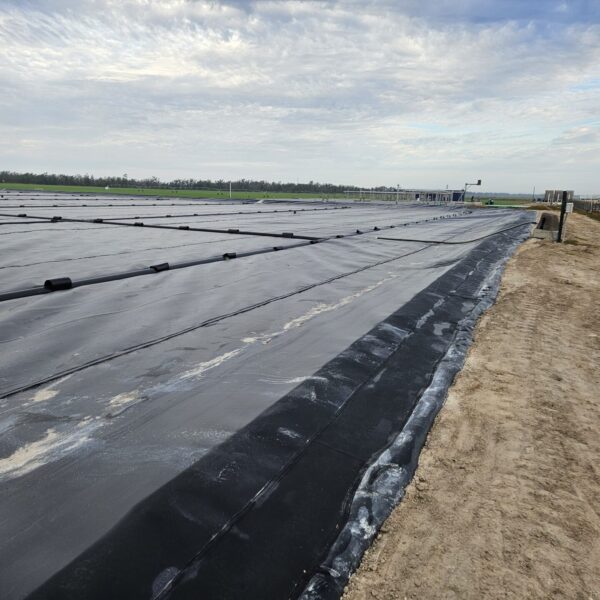
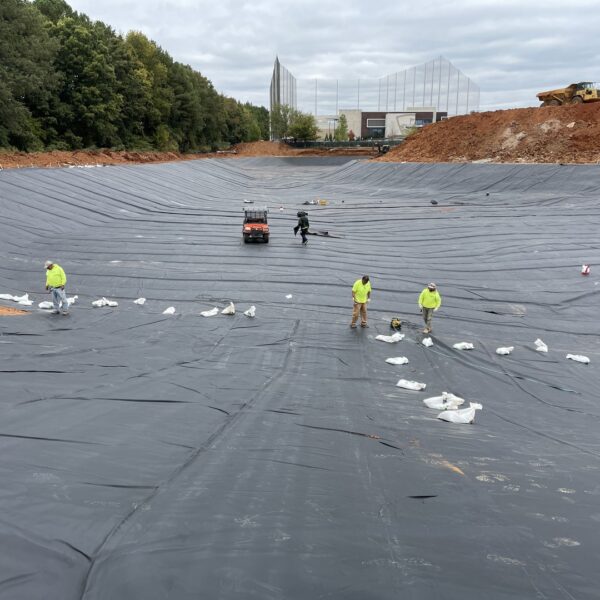
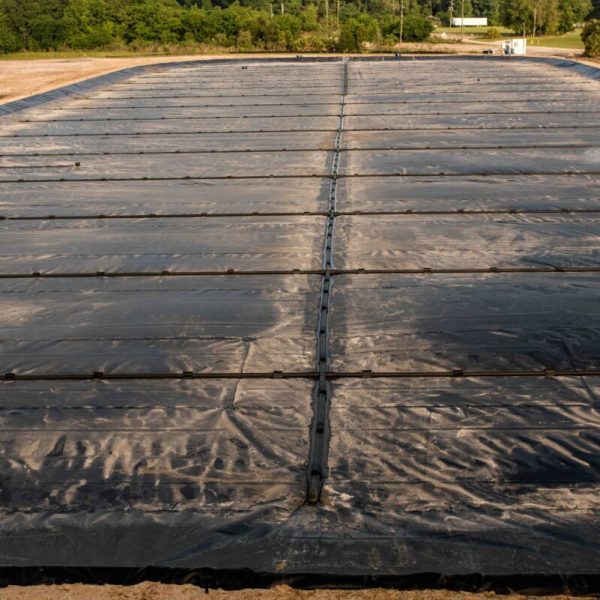
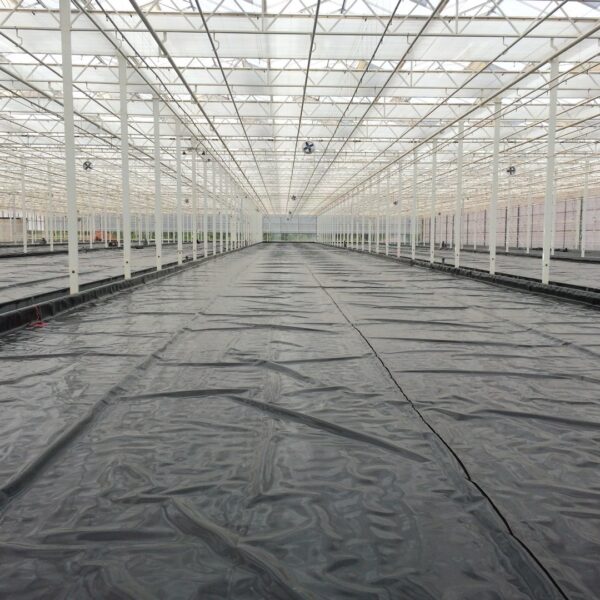
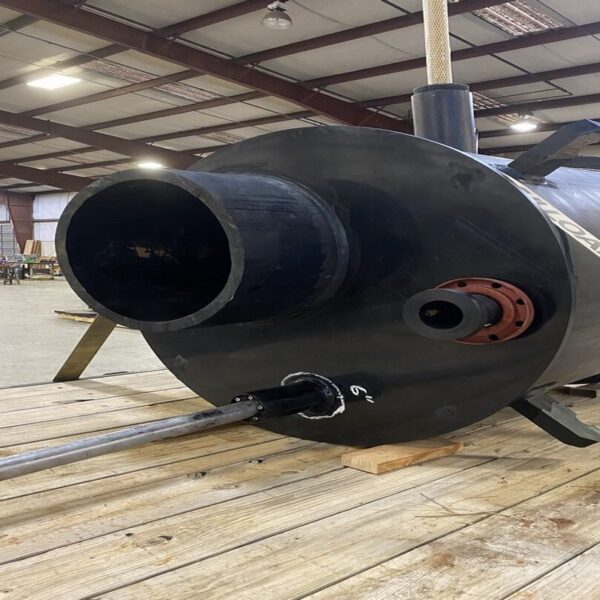
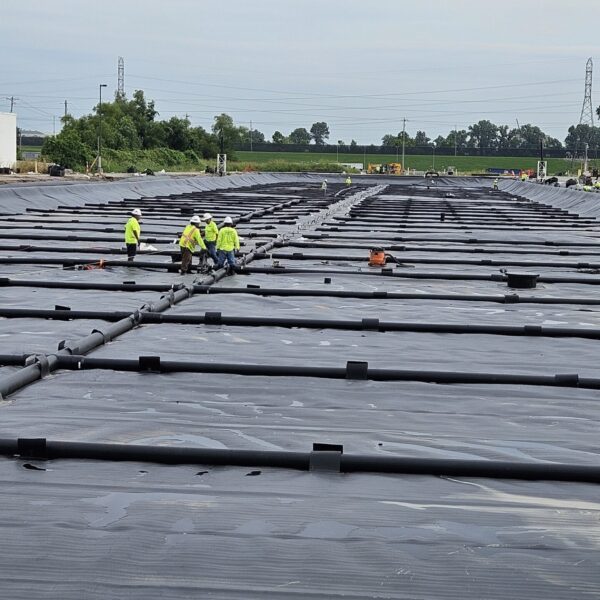
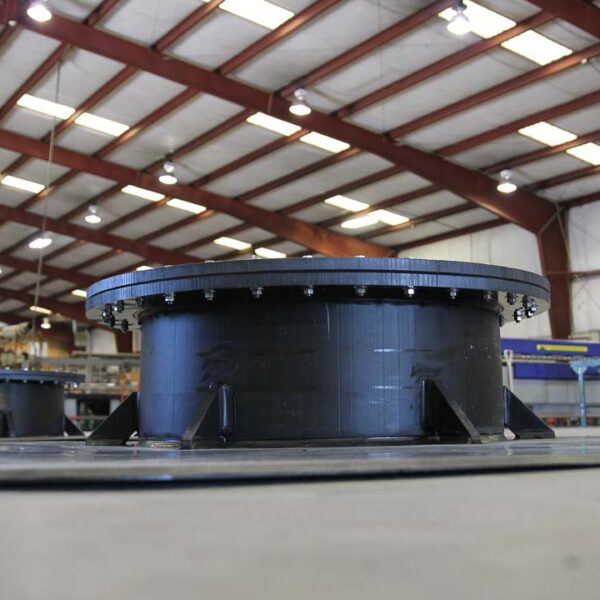
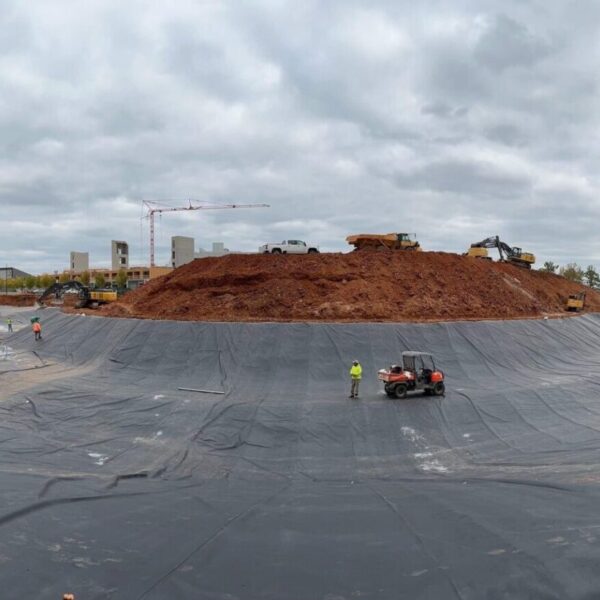
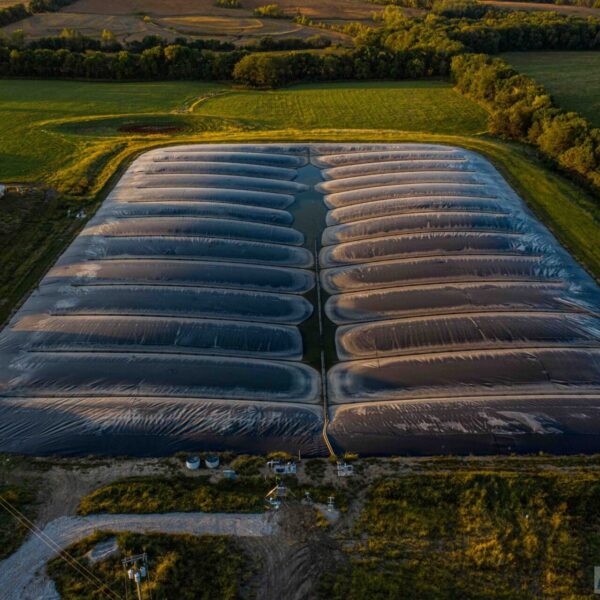
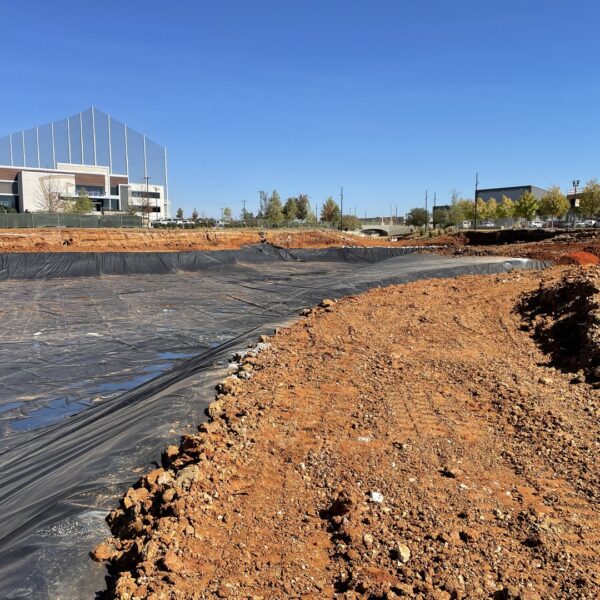
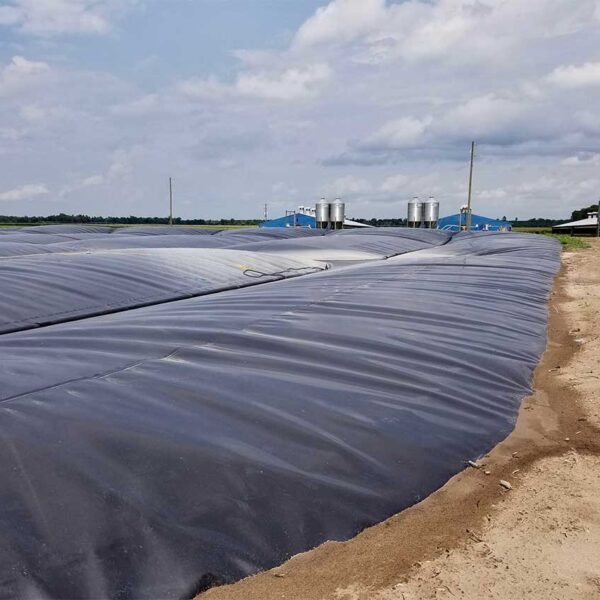
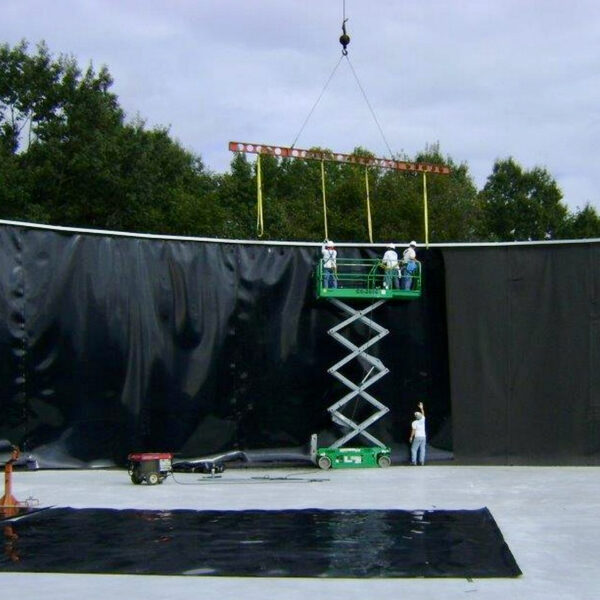
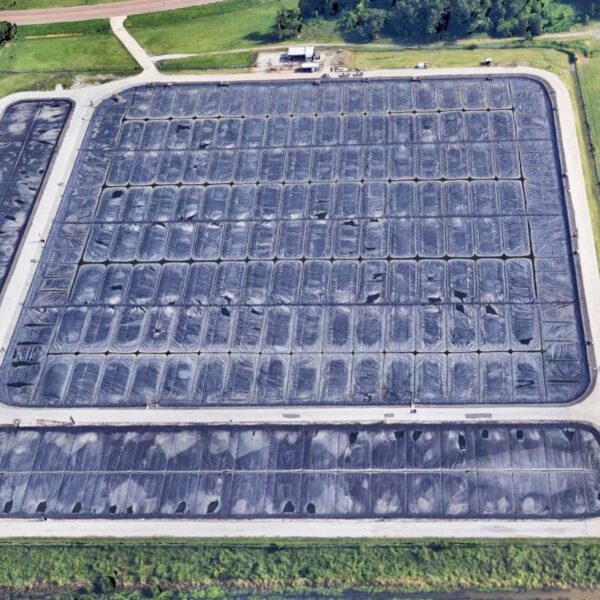
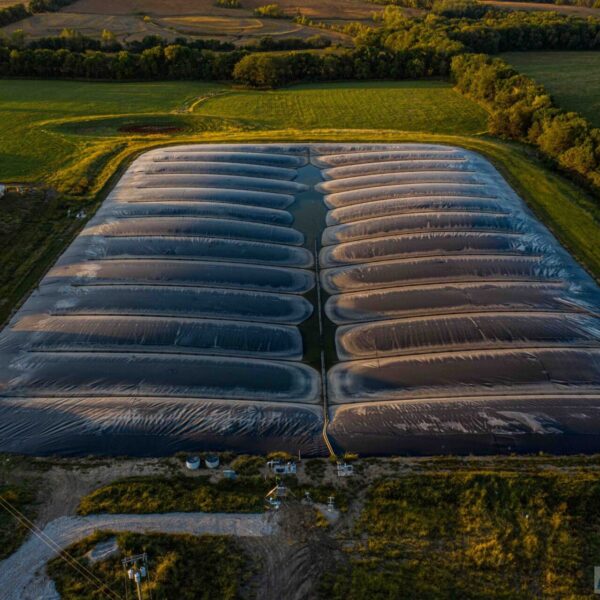
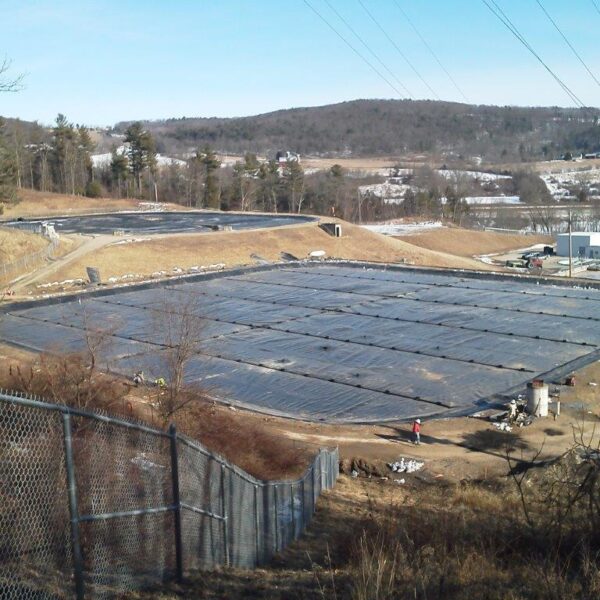
Tailings Pond Liners
CONTACT FOR TAILING POND LINER INSTALLATION
Tailings Pond & Dam Liner Installation
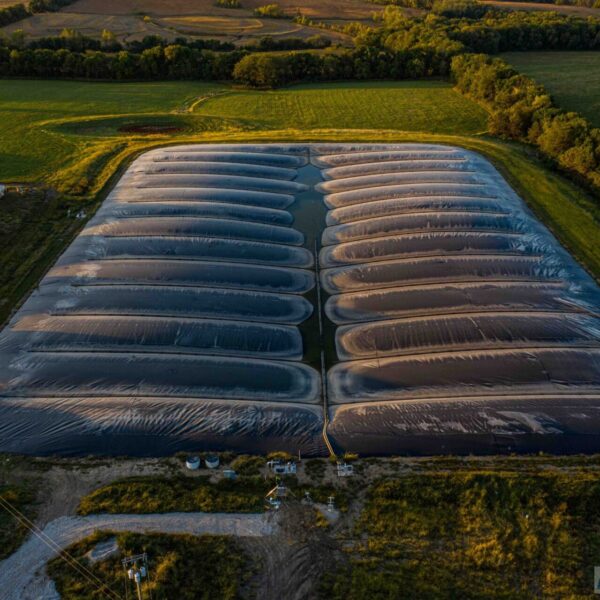
Plastic Fusion Fabricators is a leading installer of tailings pond liners — the impermeable geomembrane barrier installed across the floor and slopes of a tailings pond to prevent the leakage of mining waste, or tailings, into the surrounding soil and groundwater. A tailings pond holds the residual slurry left after mineral extraction, and the liner is the one thing standing between that waste and the environment. We install heavy-duty, fusion-welded HDPE and LLDPE liners built to hold under enormous loads and aggressive chemistry. With 40+ years of geomembrane installation across 24 states, Plastic Fusion is the installer mining operations trust when a tailings impoundment has to contain what’s in it.
A tailings pond is one of the most consequential containment structures on a mine site. It holds enormous volumes of sand, clay, residual water, and process chemicals, and a liner failure is both an environmental disaster and a regulatory crisis. The liner has to resist the chemistry of the tailings, carry the crushing weight of the stored material without failing, and stay intact for the life of the impoundment and beyond.
Built to Contain Mining Waste
The job of a tailings pond liner is containment under extreme conditions:
- Prevent groundwater contamination — seal the tailings off from the soil and groundwater beneath and around the impoundment
- Hold under load — stand up to hundreds of thousands of pounds of tailings and sludge without tearing or failing
- Resist the chemistry — contain the process chemicals and acidic or alkaline conditions tailings can carry
- Meet regulatory requirements — provide the impervious barrier that mining and environmental regulations demand
Tailings Ponds and Tailings Dams
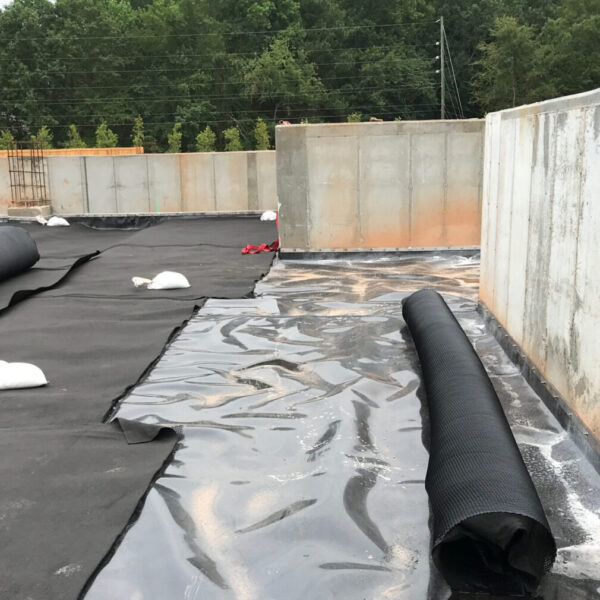
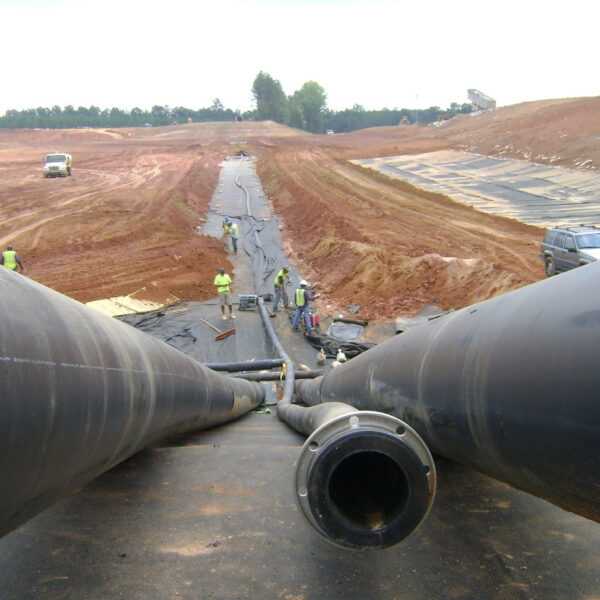
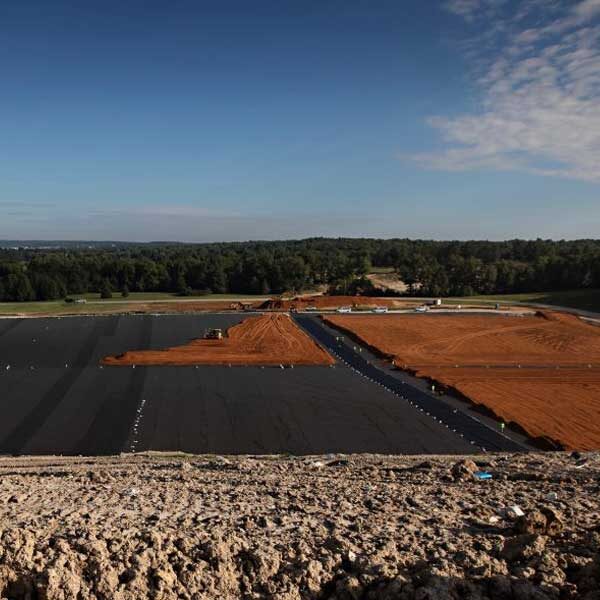
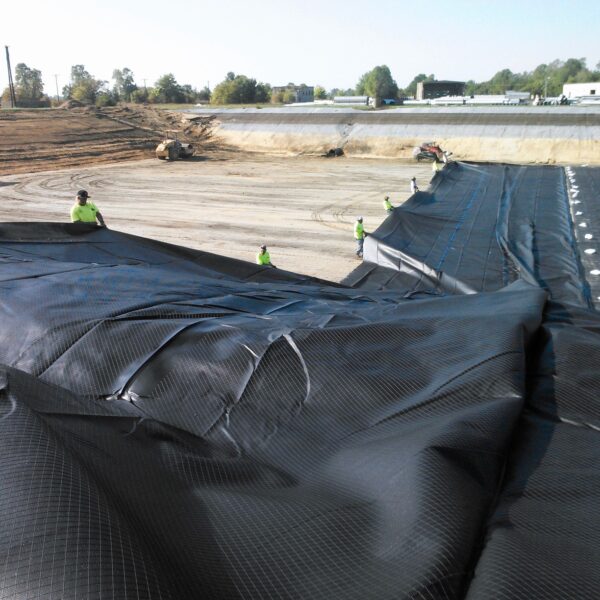
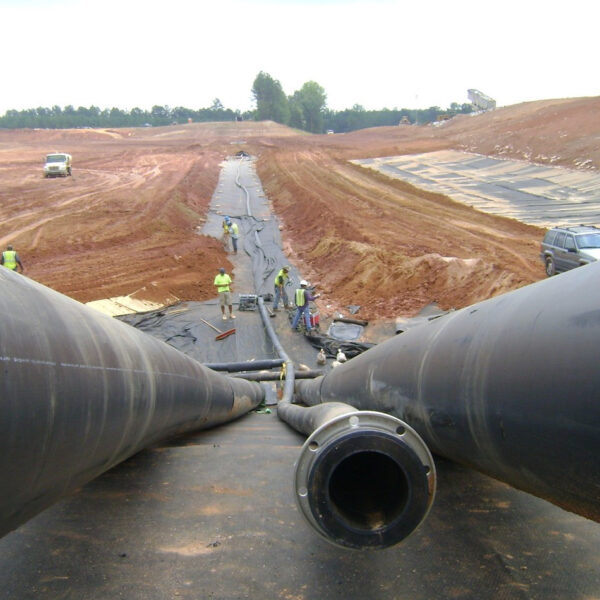
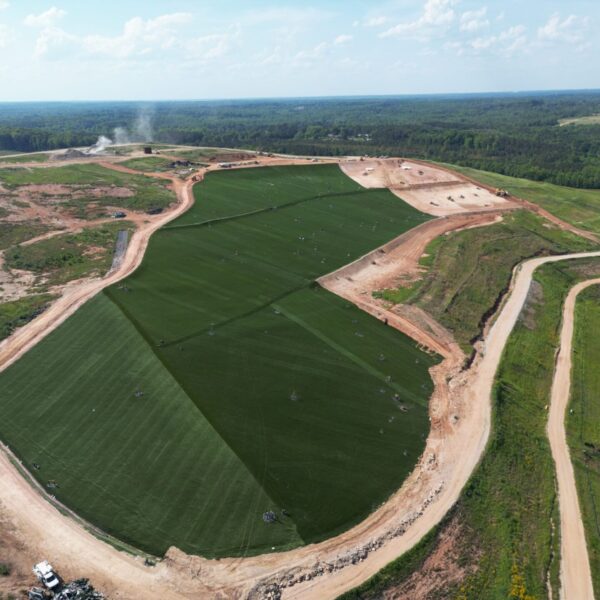
We line tailings ponds and tailings dams — the large-scale impoundments that store mine waste. The liner is fabricated to the impoundment, deployed across the floor and up the slopes and dam face, anchored, and fusion-welded into a continuous barrier. Because a tailings impoundment holds so much weight and carries such high consequences, the integrity of every seam matters — and we weld and test accordingly.
Tailings Liner Materials
- HDPE (high-density polyethylene) — the tailings standard: high tensile strength to carry the load, excellent chemical resistance for aggressive tailings, and a long service life
- LLDPE — added flexibility and elongation to conform to subgrades and accommodate settlement without stressing the liner
- RPP (reinforced polypropylene) — flexible chemical resistance where a project calls for it
We install the polyethylene-family geomembranes engineered for the loads and chemistry of tailings storage, matched to the specific tailings and impoundment.
Leak Detection and Integrity
In a tailings impoundment, an undetected leak is a slow-motion contamination event. Every liner we install is fusion-welded and seam-tested to confirm the barrier is continuous and sound before the impoundment goes into service. Tested integrity is what separates a tailings liner that protects the groundwater from one that quietly fails.
Tailings Liner Removal and Recycling
When a tailings impoundment is decommissioned or relined, the liner has to be managed responsibly. We provide tailings pond liner removal and handle end-of-life liners, including recycling where the material and condition allow — closing out the impoundment cleanly and keeping the site in compliance through decommissioning.
Related Pages
- Mining liners — for heap leach pads, process water, and the full range of mining containment, see mining containment liners
- Industrial liner installation — for broader industrial containment, see industrial liner installation
- All pond and containment liners — see our pond and containment liner applications
Why Mining Operations Choose Plastic Fusion
- 40+ years of geomembrane installation, including mining and heavy industrial containment
- Installer and fabricator — full-scope tailings pond and dam lining
- Heavy-duty HDPE and LLDPE engineered for tailings loads and chemistry
- Fusion-welded, seam-tested, continuous containment built for compliance
- Nationwide mobilization — active projects across 24 states
Tailings Pond Liner FAQs
What is a tailings pond liner?
It’s an impermeable geomembrane installed at the bottom and along the slopes of a tailings pond to keep mining waste — the slurry of sand, clay, water, and process chemicals left after extraction — from leaking into the soil and groundwater. It’s the barrier between the tailings and the surrounding environment, and it’s essential for both environmental protection and regulatory compliance.
What is the best liner material for a tailings pond?
HDPE is the standard for tailings ponds — it combines the tensile strength to carry the enormous weight of stored tailings with the chemical resistance to handle aggressive process chemistry, and it lasts. LLDPE is used where the subgrade is irregular or settling, because its flexibility lets it conform without stress. We match the material and thickness to the tailings and the impoundment.
Do you remove and recycle old tailings pond liners?
Yes. When an impoundment is decommissioned or relined, we provide tailings pond liner removal and handle end-of-life liners responsibly, including recycling where the material and condition allow.
Request a Quote
If you operate or are planning a mine with a tailings pond or dam that needs lining, relining, or decommissioning, Plastic Fusion installs the heavy-duty, fusion-welded HDPE and LLDPE containment engineered to hold it and protect the groundwater. Contact us with your project details for a quote.